FluorescenceChemistry

In situ fluorescence in the reaction vessel

Pulling samples from a running reaction is slow, can be hazardous, and can change temperature, pressure or volatile content, so the data lag behind and may be off. A fiber-optic fluorescence probe measures in place instead.

The setup

A Hellma fluorescence probe (661.057-UV) sits in the reaction vessel. Its fiber-optic cables match the F-3000 coupler of a HORIBA Fluorolog-3 fluorometer, so pipetting, mixing, heating, cleaning and the fume hood all drop out.

The example

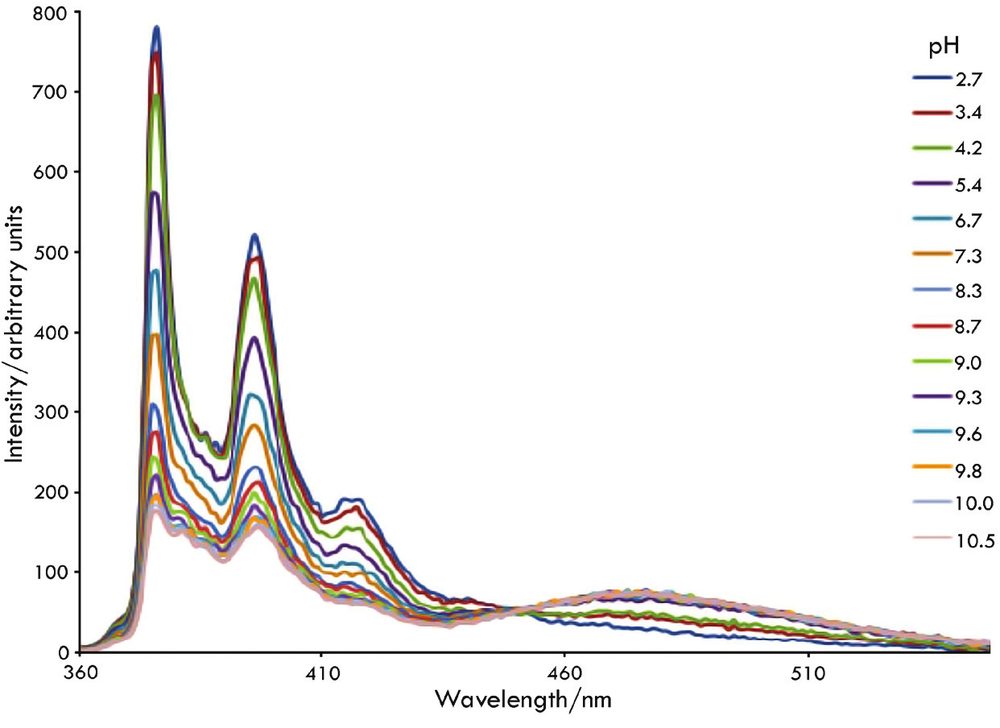
A pyrene-based nickel complex was titrated with NaOH. Excited at 340 nm, it emits at 375 and 395 nm under acidic conditions. As the pH rises, that fluorescence drops through photoinduced electron transfer, and a broad excimer band appears near 480 nm.

What is measured
Fluorescence intensityReaction progress
Third-party note (HORIBA). Confirm whether probe 661.057-UV belongs to the Espada family.
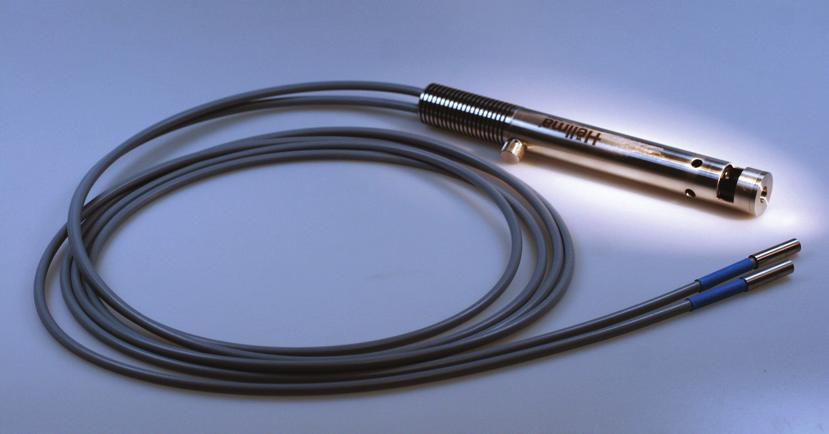
Hellma fiber-optic fluorescence probe 661.057-UV.
Fluorescence spectra of the nickel complex as the pH rises; excitation at 340 nm. Data: HORIBA Scientific.

Based on HORIBA Scientific technical note FL-34, Liquid in situ Fluorescence Measurements.

Probes and principles to look at

More Fluorescence applications