Why moisture matters
Too much residual moisture makes the powder clump and hurts flowability, yield and ultimately the drug's performance. Particle size and morphology, which shape the release profile, are set in the same step.
The old way
Karl Fischer titration needs samples taken and analyzed by hand in the lab. By the time a result comes back, the dryer has moved on.
Measured without contact
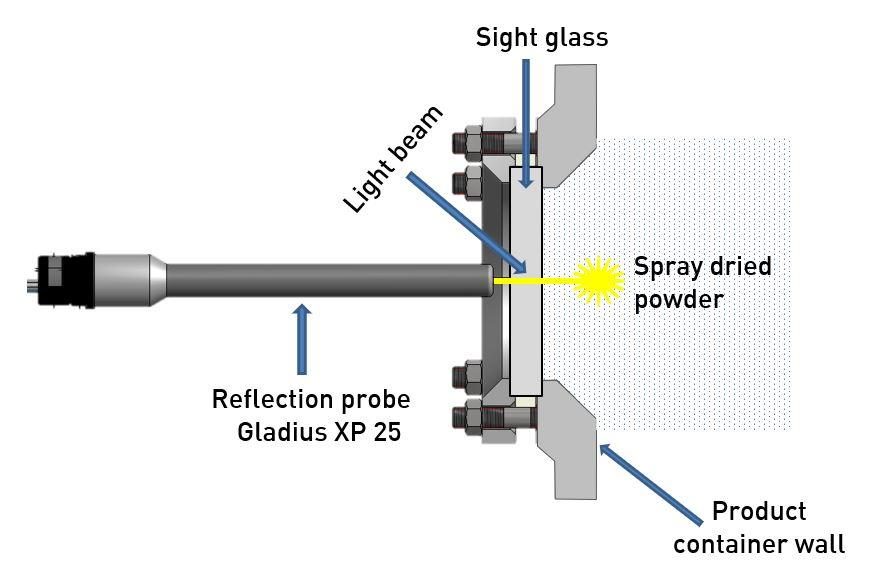
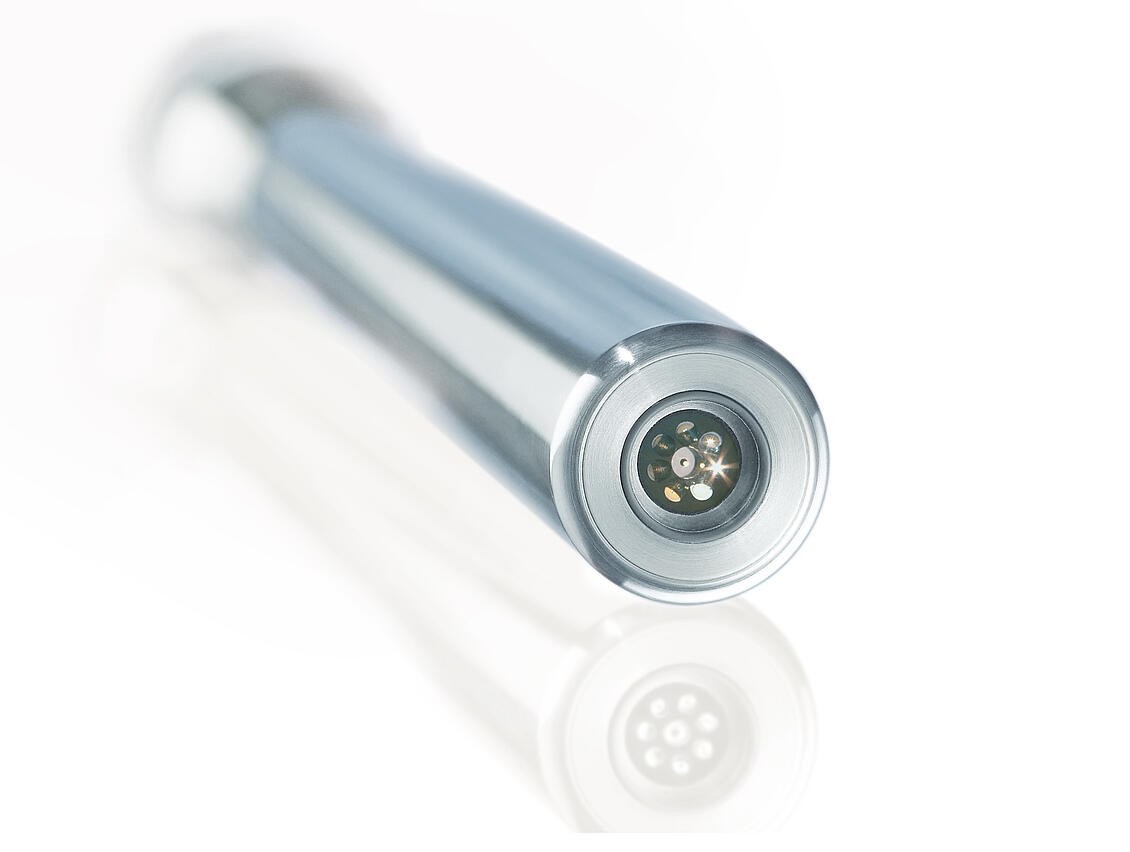
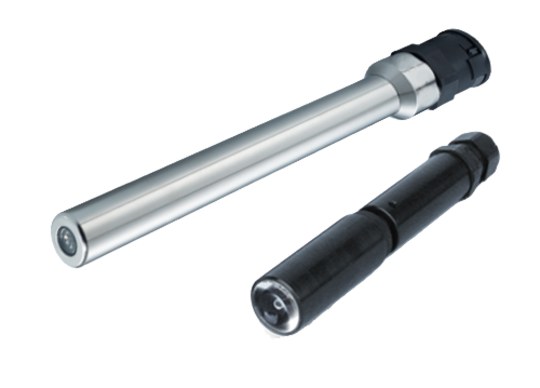
A Gladius XP 25 reflection probe coupled to an FT-NIR spectrometer looks at the powder through a sight glass. Water content is measured continuously and logged in a GxP-compliant data historian, with regular lab tests as a safety net.
Result
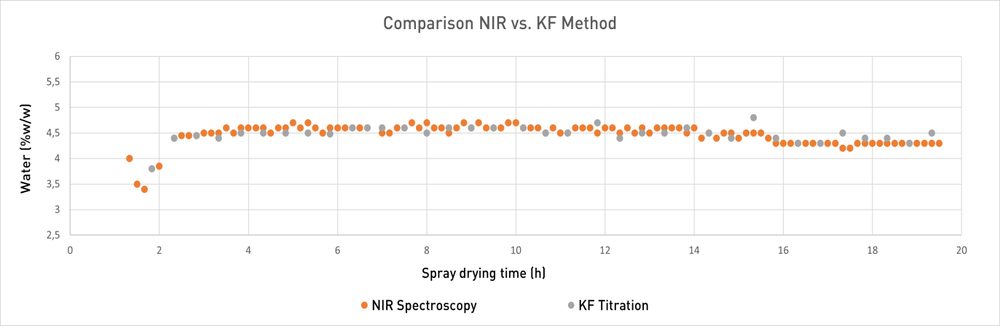
The inline NIR values match the Karl Fischer reference throughout the run, and deviations from the target are caught as they start.
What is measured
Residual moisture