Why purity matters
Moisture and other impurities in the gas are very costly in later process steps. Polycarbonate, for example, needs phosgene with at most 250 ppm carbon tetrachloride, or the clear plastic discolors.
Why online
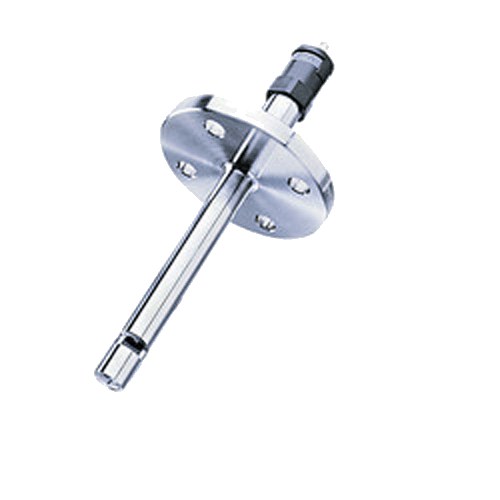
Gas chromatography limits continuous monitoring. Spectroscopic probes and cells measure directly in the gas stream, in real time. Because the gases are toxic and flammable, nothing may leak.
The flow cell
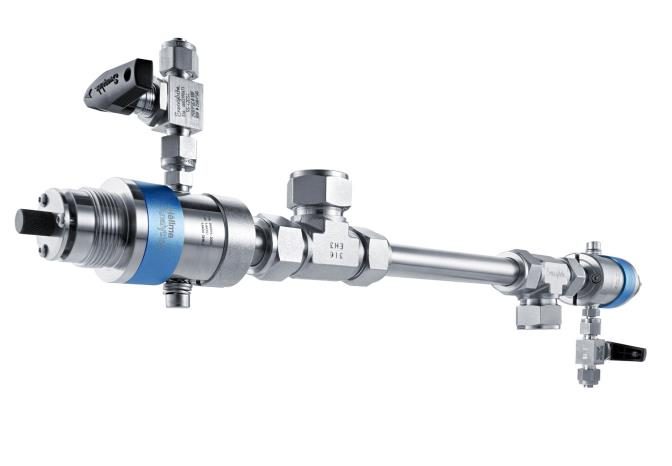
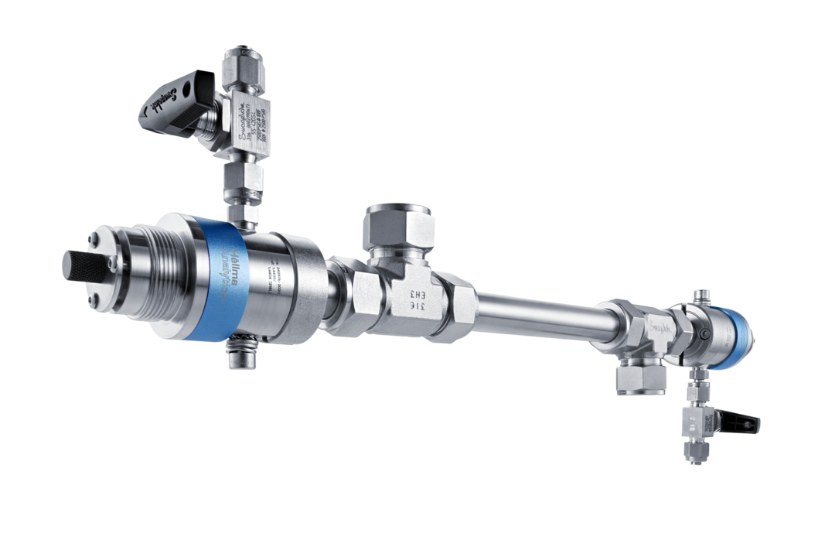
The Excalibur HD FCP, built from standard Swagelok parts, measures in transmission along the pipe axis. Path lengths of up to 2 m (6.6 ft) reach impurities in the ppt range. The optical fingers are filled with nitrogen: the slight overpressure and a second barrier keep the medium and moisture out.
Built for it
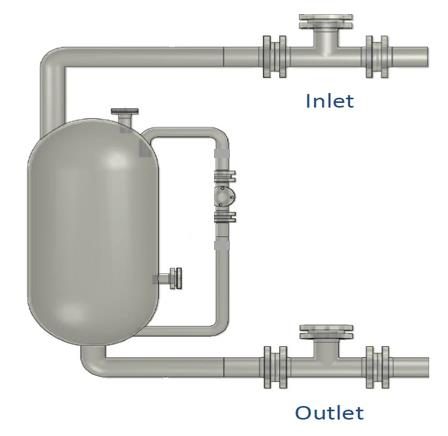
Metal seals and sapphire optics make the stainless-steel cell maintenance-free and good for 250 bar* (3630 psi) and 300 °C (572 °F). It can be used in ATEX zones 1, 2, 21 and 22, inline or atline in a bypass cabinet next to the spectrometer.
*Higher pressures are possible but cannot be certified because of testing limitations.