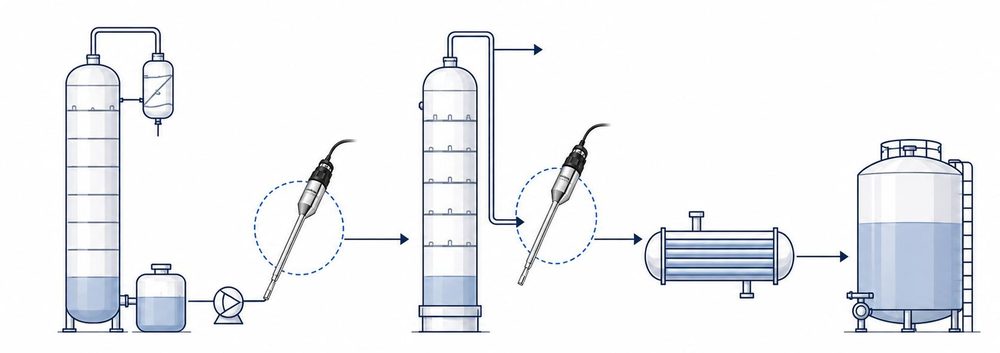
Where NIR measures
In the azeotropic distillation column, water is removed with a carrier such as toluene or isobutylbenzene. NIR follows the water content in the liquid phase to find the end point of dehydration, so the acid meets specification for final purification. Tight control improves stability, energy efficiency and throughput.
A hard place to measure
Acrylic acid can crystallize as it cools, and the crystals damage and harden seals. High-purity acid also tends to polymerize spontaneously when temperature or pressure shift, leaving polymer on the optics. Traces of polymer and inhibitor make the liquid slightly turbid.
The probe
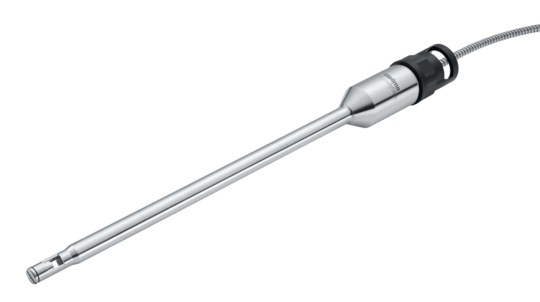
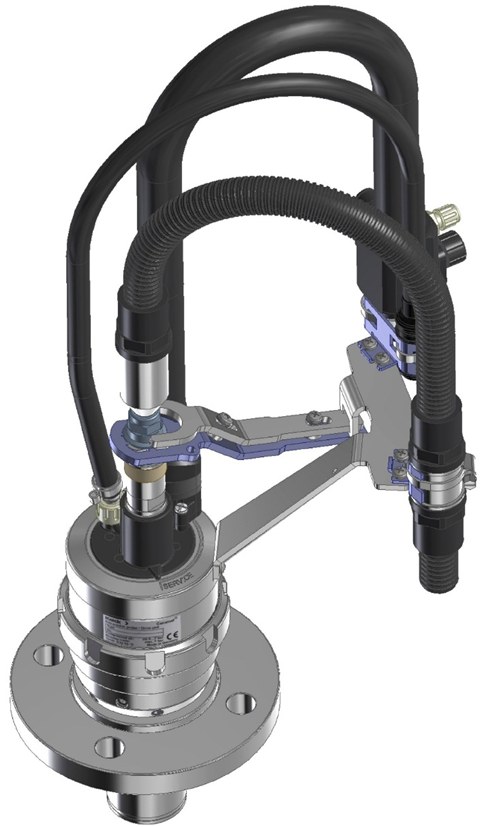
The Falcata XP transflection probe gives stable signals in highly absorbent, slightly turbid liquids. Its windows are brazed directly into a titanium housing: no elastomer seals, and no gaps or dead spaces where polymer can build up. It fits Knick Ceramat and SensoGate retractable housings.
Proven
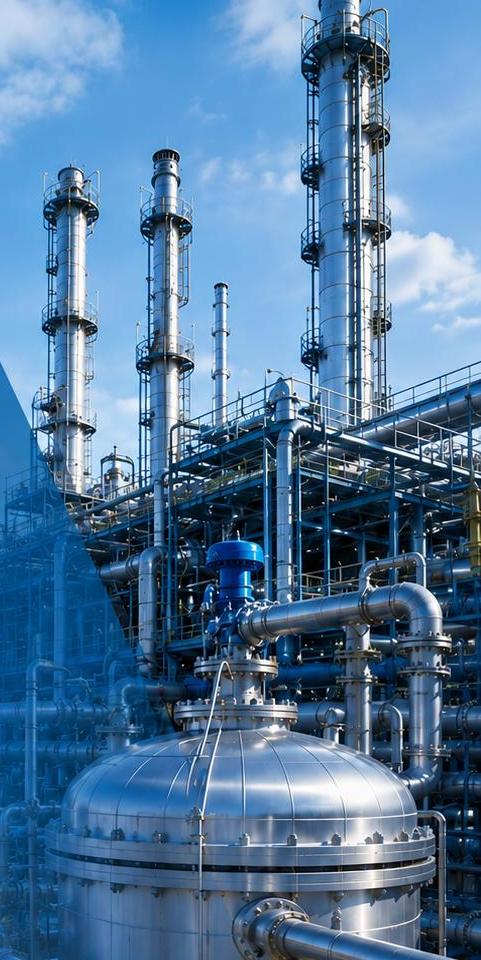
The Falcata XP has been tested under industrial conditions in acrylic acid production at a major European plant.